Imagine driving home along Highway 290 on a Tuesday afternoon only to hear the sharp, sickening crack of limestone gravel hitting your fresh clear coat. You already know that Dripping Springs is a beautiful place to live, but it remains a brutal environment for your automotive investment. Between the relentless Texas sun and the pervasive dust from local construction, maintaining a pristine exterior feels like a constant battle. You deserve to feel confident. This 2026 professional guide details exactly how to protect a car’s resale value by utilizing high-end defensive technologies that block up to 99% of damaging UV radiation.
We will explore how elite paint protection film and hydrophobic ceramic coatings act as a master craftsman’s armor against rock chips and hard water spots. Our team understands that every vehicle is a masterpiece that requires a disciplined approach to preservation. By the end of this article, you will understand the meticulous steps required to secure a flawless trade-in value and maintain unrivaled aesthetics for years to come. Your journey toward total vehicle transformation starts with understanding how to shield your asset from the unique challenges of the Hill Country.
Key Takeaways
- Understand the “Texas Tax” and how the unique Dripping Springs climate accelerates vehicle depreciation faster than the national average.
- Discover how to protect a car’s resale value by maintaining a meticulous, centralized service history that proves your vehicle’s mechanical integrity.
- Learn why traditional carnauba wax fails in the 100-degree Hill Country heat and how ceramic coatings offer a permanent, hydrophobic sacrificial layer.
- Identify the high-impact zones of your vehicle that require Paint Protection Film (PPF) to provide a transparent shield against “Texas Road Rash” and physical debris.
- Explore why professional paint correction is a non-negotiable foundation for any high-end protection strategy to ensure a flawless, showroom-grade finish.
The Economics of Depreciation: Why Resale Value Protection Matters in Dripping Springs
Resale value protection is the strategic preservation of a vehicle’s aesthetic and mechanical integrity. For owners in the Hill Country, understanding how to protect a car’s resale value begins with a clear-eyed look at the numbers. Every vehicle experiences market depreciation, an external force dictated by global supply and demand that owners cannot control. However, condition depreciation is entirely within your hands. By maintaining a pristine exterior and a healthy mechanical system, you shield your asset from the steep financial drop-off that affects neglected vehicles. We view every vehicle as a masterpiece, and our role is to act as the trusted guardian of that investment.
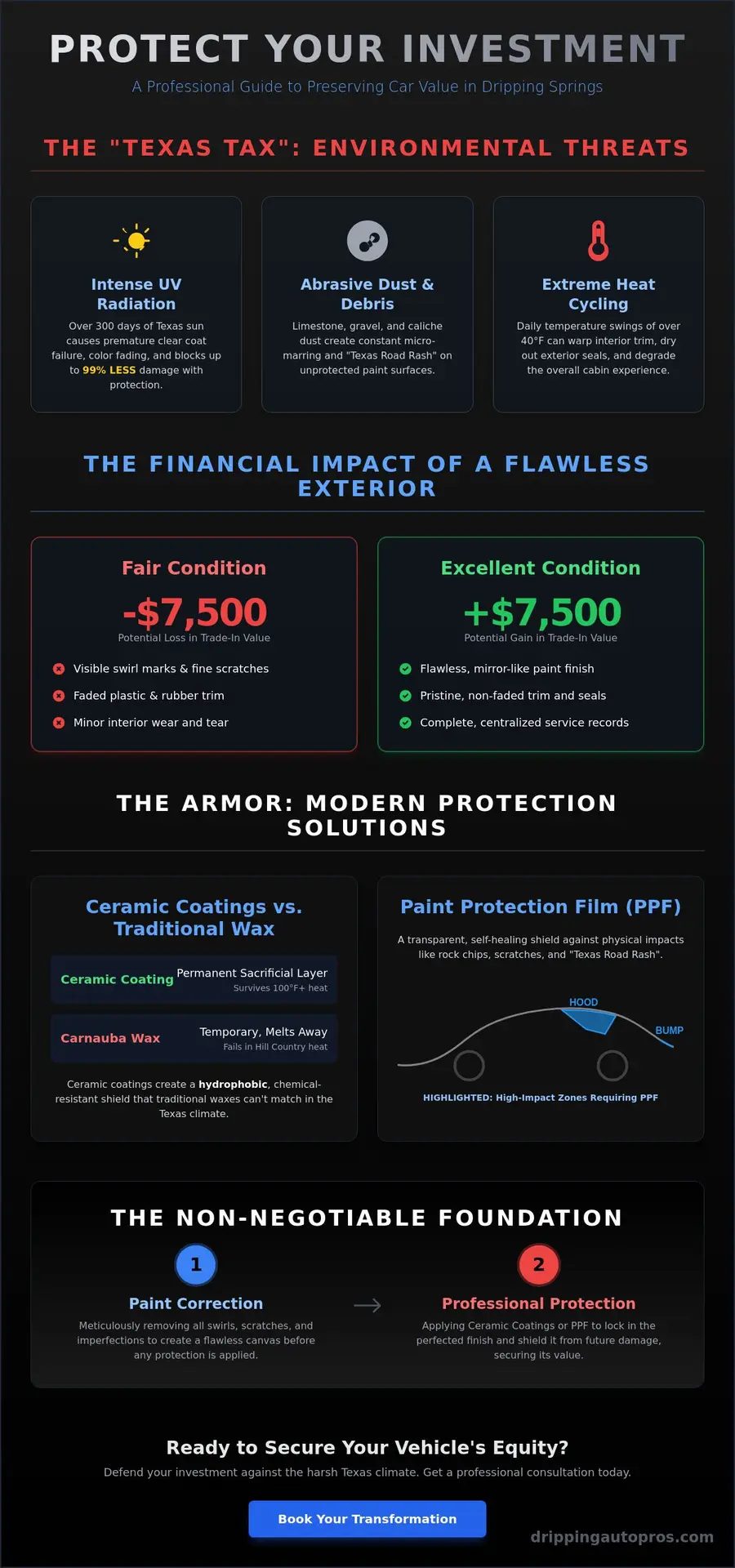
Local drivers face what we call the Texas Tax. This regional reality means our climate can accelerate a vehicle’s loss in car valuation faster than national averages. Professional-grade surface protection isn’t a luxury; it’s a method of equity preservation that keeps your vehicle’s worth locked in despite the harsh environment. When you invest in high-end coatings and films, you’re essentially installing armor that defends your equity against the elements.
The Central Texas Environmental Threat Profile
The Hill Country landscape is breathtaking, but it’s notoriously aggressive toward automotive finishes. UV radiation is the primary culprit, with over 300 days of intense Texas sun causing premature clear coat failure and significant color fading on unprotected surfaces. Beyond the sun, limestone and caliche dust from local ranch roads act as a constant abrasive, micro-marring the paint every time the vehicle is improperly cleaned. Heat cycling also plays a role. The extreme temperature swings we experience, often shifting 40 degrees in a single day, can cause interior trim to warp and exterior seals to dry out, leading to costly cosmetic repairs and a degraded cabin experience.
The Financial Impact of a Flawless Exterior
Data from industry valuation leaders indicates that the gap between an Excellent and Fair condition rating can impact trade-in offers by $3,000 to $7,500 on late-model luxury vehicles. This price delta is driven by the psychology of the buyer. When a prospective owner sees a mirror-like finish and a clean engine bay, they instinctively believe the mechanical components have been treated with the same level of meticulous care. Knowing how to protect a car’s resale value through professional detailing provides a massive return on investment. In private party sales, a flawless finish acts as a silent negotiator that justifies a premium, non-negotiable asking price.
- Excellent Condition: No cold start issues, flawless paint, and full service records.
- Fair Condition: Visible swirl marks, faded trim, and minor interior wear.
- The Difference: A five-figure swing in total cost of ownership over three years.
Our approach at Dripping Auto Pros ensures that your vehicle remains in that top-tier category. We apply technical precision to every surface, ensuring that your car’s journey toward perfection is preserved for the next owner to admire.
The Foundation of Automotive Equity: Maintenance and Documentation
Preserving your vehicle’s worth starts with a shift in perspective. You aren’t just a driver; you’re the steward of a high-value asset. While many owners focus solely on the odometer, the market rewards those who establish a rigorous mechanical baseline to support their aesthetic preservation. According to 2024 industry data, a complete, verifiable service history can increase a vehicle’s sale price by 10% to 12% compared to an undocumented counterpart. In the Central Texas heat, this documentation serves as proof that the vehicle hasn’t just survived the elements but has been actively shielded from them.
Dripping Springs driving is deceptive. While the scenery is beautiful, the combination of steep Hill Country grades, 100-degree summer days, and limestone dust means your vehicle operates under “Severe Service” conditions. This classification, found in 90% of owner manuals, mandates shorter maintenance intervals. Ignoring these specialized needs creates “Value-Killers” that are difficult to reverse. For example, a car with lingering smoke odors or pet dander can see a price deduction of $2,400 at the time of trade-in. Spills that are left to sit can seep into electronic seat sensors, leading to costly repairs that appear on vehicle history reports.
The Master Craftsman’s Documentation Strategy
To truly master how to protect a car’s resale value, you need a “Vehicle Passport.” This physical and digital binder should house every receipt, from 5,000-mile oil changes to specialized detailing services. Professional invoices from a reputable shop carry significantly more weight than DIY logs because they provide third-party verification of the work performed. High-end protection services, such as the installation of Paint Protection Film (PPF), are now frequently tracked by Carfax. This digital trail transforms a simple service into a permanent upgrade to the car’s pedigree. A vehicle with a verified history of professional surface protection often commands a premium on the private market because it represents a “turn-key” investment for the next owner.
Driving Habits That Save Your Paint
Your daily commute on Highway 290 is a gauntlet for your vehicle’s exterior. Following distances are critical; staying at least three car lengths behind commercial vehicles reduces high-velocity rock impacts that cause deep paint chips. Your parking choices also dictate your car’s longevity. While parking under a Live Oak might offer relief from the sun, the resulting sap and bird droppings can etch into your clear coat within 48 hours. Conversely, constant UV exposure fades interior plastics and dries out leather. The most dangerous habit, however, is the use of automatic “brush” car washes in the Austin area. These machines use abrasive bristles that create thousands of micro-scratches, known as swirl marks. These defects dull the paint’s depth and are a primary factor in how to protect a car’s resale value over the long term. Choosing touchless options or professional hand washes is the only way to maintain a showroom-grade finish.
Ceramic Coatings vs. Traditional Wax: A Value Comparison for Texas Drivers
Dripping Springs summers are a test of endurance for any automotive finish. While carnauba wax was once the gold standard, it is now functionally obsolete in the Central Texas climate. Carnauba begins to melt at approximately 160 degrees Fahrenheit. On a typical 100-degree July afternoon, the surface temperature of a dark-colored vehicle can easily exceed 180 degrees. This causes the wax to evaporate within weeks, leaving your clear coat defenseless against UV oxidation and acidic bird droppings.
Modern owners are shifting toward ceramic coating for cars as a permanent sacrificial layer. Unlike wax that sits on top of the paint, ceramic coatings utilize nanotechnology to fill microscopic pores in the surface. This creates a glass-like shield that is significantly harder than the factory clear coat. For local drivers, the primary benefit is the extreme hydrophobic property. Central Texas is notorious for hard water; ceramic coatings prevent these mineral-heavy droplets from bonding to the paint, which stops permanent etching before it starts. Products like Feynlab Ultra take this further by engineering a chemical bond that resists environmental contaminants at a molecular level.
Revivify Self-Healing Coating: The Next Level of Value Protection
The pinnacle of paint preservation is Revivify Self-Healing Coating. This technology functions like a flexible skin for your vehicle. When the surface receives minor swirl marks or light scratches from improper washing, the coating uses heat to “heal” itself. The intense Texas sun actually works in your favor here, as the ambient heat activates the coating’s memory properties to return the surface to a flawless state. This keeps your vehicle looking “just detailed” for years rather than days. It offers a massive return on investment by virtually eliminating the need for aggressive paint correction in the future, which preserves the thickness of your original factory paint.
Comparing Protection Lifespans
When analyzing how to protect a car’s resale value, the timeline of protection is the most critical metric. A standard professional wax provides roughly 90 days of protection before it requires reapplication. In contrast, a professional ceramic coating typically lasts between 3 and 5 years. Revivify offers even more advanced durability through its flexible, self-healing structure. Consider the total cost of ownership over a five-year period:
- Traditional Wax: Requires 20 separate applications over 60 months to maintain basic coverage.
- Ceramic Coating: A single professional application provides 1,825 days of continuous defense.
- Revivify: Provides elite protection with the added benefit of self-healing, maintaining a showroom shine without repeated polishing.
Professional application is essential because it includes the documented warranty necessary for resale validation. When you eventually list your vehicle, having a certified record of a high-end coating proves to the buyer that the paint has been shielded from the elements. This is the most proactive strategy for how to protect a car’s resale value in the competitive Dripping Springs market.
Paint Protection Film (PPF): The Ultimate Shield Against Road Debris
While ceramic coatings offer exceptional chemical resistance, only Paint Protection Film (PPF) provides a true physical barrier against the harsh realities of Central Texas driving. If you’re researching how to protect a car’s resale value, you’ve likely seen the pitted, sandblasted look that plagues many local vehicles. We call this “Texas Road Rash.” It’s the cumulative result of relentless impact from limestone gravel and construction debris found on Highway 290 and the winding backroads of Dripping Springs.
PPF acts as an invisible armor for your vehicle. It’s a high-impact polyurethane layer that absorbs the kinetic energy of a strike, often healing itself from minor scratches through simple heat exposure. For owners of Teslas and luxury SUVs in the Austin area, this protection is a necessity. Tesla paint is notoriously soft, and the flat front surfaces of a Model Y or a Rivian act like magnets for rock chips. Preserving the original factory finish is the single most effective way to ensure your vehicle commands a premium price when it’s time to sell, as it proves the car has been maintained to a professional standard.
Partial vs. Full Body PPF Coverage
Choosing the right level of coverage depends on your driving habits and long-term goals. A “Clear Bra” strategy focuses on the high-impact zones: the front bumper, hood, fenders, and side mirrors. This provides essential defense where 90% of physical damage occurs. For those maintaining “Collector Grade” daily drivers, full body protection ensures every square inch of the vehicle remains pristine. Our specialists often integrate these films with ceramic coatings to create a dual-layer defense system that combines impact resistance with unrivaled hydrophobicity.
Addressing the Cost Objection
The initial investment in PPF often leads to hesitation, but the math favors the protected owner. The cost of professional car paint repair for a single front-facing panel can easily exceed the cost of the film itself. More importantly, a resprayed panel is never as valuable as factory paint to a discerning buyer or a dealership appraiser. PPF is an insurance policy against the unpredictable Central Texas roads. By preventing damage before it happens, you’re securing a higher return on your asset. Understanding how to protect a car’s resale value means recognizing that prevention is always more cost-effective than restoration.
Secure your vehicle’s future today. Contact Dripping Auto Pros for a professional consultation and custom PPF quote.
Restoring Before Protecting: Why Paint Correction is Non-Negotiable
Applying a high-end ceramic coating or paint protection film over damaged clear coat is a wasted investment. True automotive preservation begins with paint correction, which is the meticulous process of mechanically leveling the surface to remove swirl marks, oxidation, and scratches. When defects remain on the paint, they become trapped under the protective layer, magnifying the imperfections rather than hiding them. To understand how to protect a car’s resale value, you must first ensure the foundation is flawless.
Our Master Craftsman approach utilizes a tiered system based on the specific needs of your vehicle. A Level 1 correction is typically reserved for newer cars with minor factory marring, aiming for a 70% to 80% improvement in clarity. For vehicles that have faced several years of Texas sun or improper wash techniques, a Level 2 correction is necessary. This multi-stage process utilizes varying abrasive compounds to eliminate deeper defects, often restoring the finish to 95% of its original showroom luster. This restoration stage is the difference between a car that looks “clean” and one that commands a premium price on the secondary market.
The Detailing Studio Advantage
Mobile detailing serves a purpose for basic maintenance, but it falls short for elite preservation. High-end protection requires the climate control and specialized lighting found only in a professional studio. In the 20-mph winds common in Dripping Springs, mobile operations risk introducing dust and grit into the polishing pads. This contamination leads to pigtail scratches and inconsistent bonding of the coating. Dripping Auto Pros operates as a dedicated, shop-based studio where every variable is managed. We use high-intensity LED arrays to reveal microscopic defects that natural sunlight often hides, ensuring your vehicle leaves as a masterpiece of precision.
Final Checklist for Resale Readiness
Maintaining the equity in your vehicle requires a disciplined strategy. Owners who follow a structured “Equity Protection Plan” consistently see higher returns when it’s time to trade in or sell. Use this checklist to ensure your vehicle remains in the top 5% of its class:
- Prioritize Correction: Never seal in damage; always correct the paint before applying long-term protection.
- Early Intervention: Start your protection plan within the first 30 days of ownership to prevent rock chips and UV degradation.
- Climate-Controlled Application: Ensure all coatings are applied in a dust-free, indoor environment for maximum bonding.
- Documented Maintenance: Keep a digital log of professional detailing services to prove the car has been maintained to a “Concours” standard.
- Interior Preservation: Apply UV-resistant shields to leather and trim to prevent the dry-rot common in the Hill Country.
Your vehicle is a significant financial asset that deserves specialized care. Schedule a consultation with Dripping Auto Pros to build your protection plan and secure your car’s future value today.
Secure Your Vehicle’s Future in Dripping Springs
Preserving automotive equity in the Texas Hill Country demands a strategy that goes beyond the surface. You’ve seen how meticulous documentation and a proactive maintenance schedule can mitigate the average 15% annual depreciation reported by industry analysts like CARFAX. By choosing advanced solutions like Paint Protection Film or specialized Revivify coatings, you’re installing a self-healing shield against the unique road debris found on Highway 290. Mastering how to protect a car’s resale value ensures your vehicle remains a high-value asset rather than just a depreciating machine.
At Dripping Auto Pros, we bring a Master Craftsman approach to every project. As a veteran-owned and operated studio right here in Dripping Springs, we’re certified installers of Revivify Self-Healing Coatings and experts in precision paint correction. We treat your vehicle with the discipline and technical authority it deserves, ensuring a flawless finish that lasts for years. Your journey toward a pristine, protected vehicle starts with a team that cares about the details as much as you do.
Protect Your Investment with Dripping Auto Pros
It’s time to give your car the elite protection it needs to stand the test of time and terrain.
Frequently Asked Questions
Does ceramic coating actually increase my car’s resale value?
Yes, ceramic coating preserves the factory finish, which can increase a vehicle’s resale value by up to 15 percent compared to poorly maintained cars according to data from Kelley Blue Book. It provides a semi-permanent hydrophobic barrier that prevents oxidation and chemical etching. By maintaining a showroom-like appearance, you ensure the exterior condition remains in the Excellent category, a rating that significantly impacts trade-in offers.
Is Paint Protection Film (PPF) worth it if I only drive in Dripping Springs?
PPF is essential for Dripping Springs drivers because Highway 290 and local ranch roads frequently launch limestone gravel and debris that chip paint. These physical impacts cause 80 percent of preventable exterior damage on modern vehicles in Central Texas. A high-quality film acts as a transparent armor, absorbing kinetic energy from road debris and preventing the unsightly chips that instantly lower a car’s appraisal value.
How often should I have my car professionally detailed to maintain its value?
You should schedule a professional detail at least twice per year to effectively manage environmental contaminants. Regular maintenance every 180 days ensures that acidic bird droppings or tree sap don’t etch into the clear coat permanently. This consistent care is a primary strategy for how to protect a car’s resale value, as it prevents the cumulative degradation that leads to expensive restoration needs later.
Can I install PPF or ceramic coating myself to save money?
Professional installation is recommended because 90 percent of a coating or film’s success depends on the decontamination and paint correction process. DIY kits often lack the industrial-grade chemical concentrations found in professional products like Revivify. Improper application can lead to high spots, peeling edges, or trapped debris; these issues require costly professional removal and can actually diminish the car’s visual appeal.
What is the difference between a car wash and professional paint correction?
A car wash removes surface dirt, while professional paint correction uses machine polishers to remove 95 percent of surface swirls and scratches. Standard tunnel washes often use abrasive brushes that create micro-marring on the clear coat. Our correction process restores the actual depth and clarity of the paint, creating a flawless surface that’s necessary before applying any long-term protective shield.
Will a self-healing coating like Revivify help with existing scratches?
Revivify’s heat-activated self-healing technology is designed to repair new surface-level swirls rather than deep, existing scratches. While it can fill extremely minor imperfections, we perform a multi-stage paint correction first to ensure the surface is 100 percent pristine. Once applied, the coating’s memory-polymer structure allows it to return to a smooth state when exposed to the Texas sun or external heat sources.
How does the Texas heat affect my car’s exterior if it is not protected?
Unprotected paint exposed to the 100-plus degree temperatures common in Dripping Springs suffers from accelerated UV degradation and oxidation. UV rays break down the molecular bonds in the clear coat, leading to a chalky appearance or clear coat failure within 5 to 7 years. A ceramic coating acts as a sunblock, reflecting 99 percent of harmful UV radiation to preserve the paint’s original pigment and gloss.
Is it better to protect a new car immediately or wait until it has some wear?
You should protect a new car immediately to lock in the factory finish before environmental damage occurs. Most vehicles arrive from the dealership with minor transport defects, and addressing these within the first 30 days of ownership is the most efficient way how to protect a car’s resale value. Early intervention prevents the need for aggressive, deep paint correction and ensures the highest possible protection from day one.