The $20 paint pen you bought at a big-box store might be the most expensive mistake you ever make for your vehicle’s resale value. We understand the immediate urge to cover that jagged chip caused by limestone debris on Highway 290 before the next rain. While a quick car paintwork touch up seems like a simple Saturday project, the harsh reality of the Texas sun often turns a DIY fix into a bubbling, mismatched eyesore within 90 days. You want to preserve your investment, but a rushed application often traps moisture and accelerates the very oxidation you’re trying to prevent.
In this guide, you’ll discover why a basic touch-up pen lacks the chemical bond required to survive 100-degree Dripping Springs summers and when your vehicle demands the technical precision of professional paint correction. We’ll examine the critical differences between a temporary cosmetic patch and a permanent, invisible restoration that acts as a shield for your car’s finish. From understanding the chemistry of UV-resistant clear coats to mastering the art of seamless leveling, we’ll help you decide if your car deserves a quick fix or a Master Craftsman’s touch.
Key Takeaways
- Understand how the intense Dripping Springs sun accelerates damage in exposed chips, turning minor cosmetic flaws into significant risks for your vehicle’s bodywork.
- Learn why standard DIY kits often result in an unsightly “blob” effect and how a professional car paintwork touch up ensures a seamless blend that matches both color and texture.
- Discover the transformative power of paint correction as a surgical restoration method that levels your clear coat to eliminate the need for superficial patches.
- Master the “Fingernail Test” to accurately gauge scratch depth and determine when damage requires the precision of a master craftsman.
- Explore how a meticulous decontamination and restoration process acts as a protective shield, preserving your vehicle’s longevity and resale value against the Texas elements.
Understanding Car Paintwork Touch Up in the Dripping Springs Climate
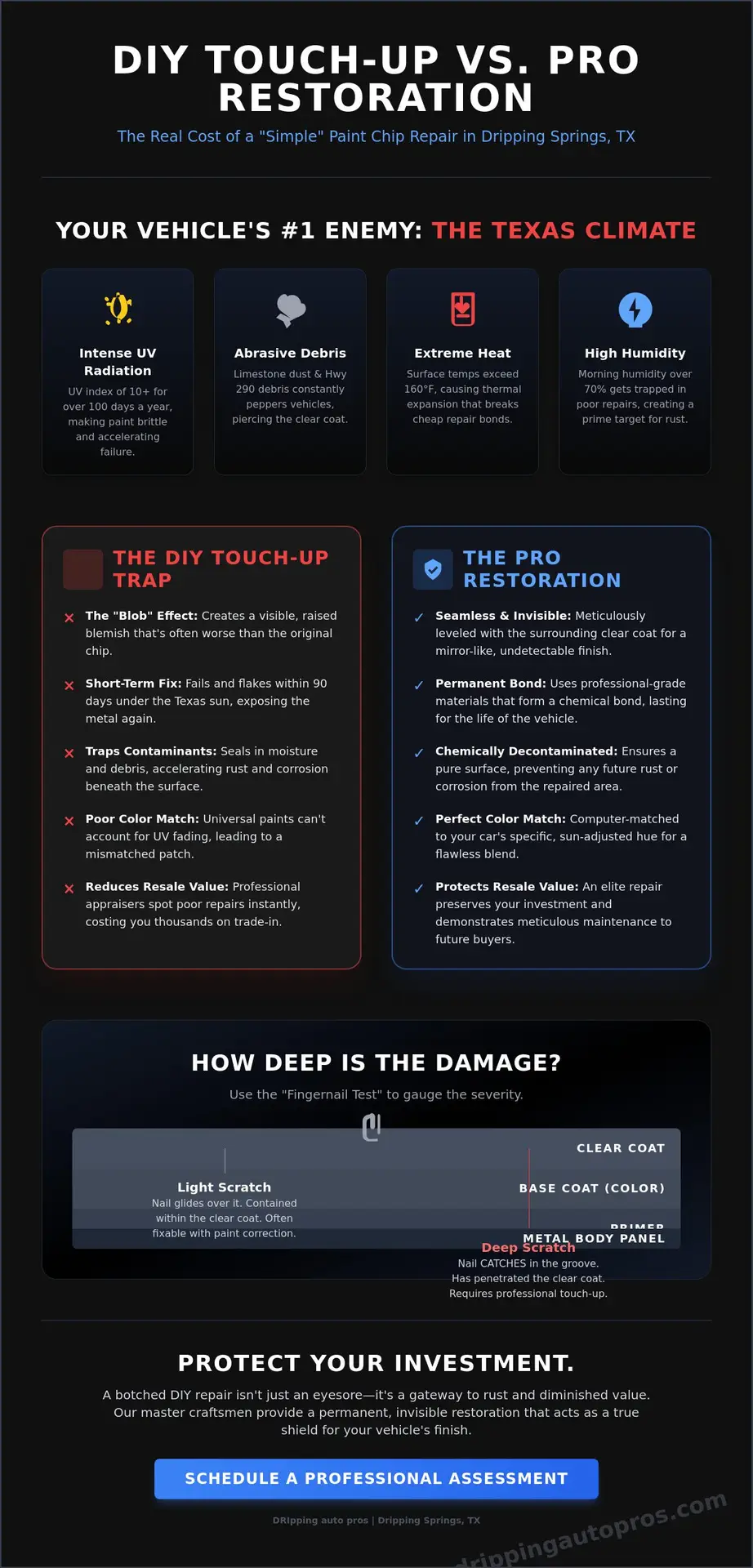
A standard car paintwork touch up typically involves applying a small amount of color-matched pigment to a localized chip to prevent rust. In contrast, professional restoration is a meticulous process that addresses the surrounding clear coat and levels the surface to achieve a seamless, mirror-like finish. For owners in the Hill Country, these small imperfections are more than cosmetic flaws. The intense Texas sun, which maintains a UV index of 10 or higher for over 100 days each year, targets the exposed edges of paint chips. This concentrated radiation causes the surrounding layers to become brittle, turning a minor nick into a significant area of delamination within months.
Central Texas presents a harsh environment where limestone dust from local construction and quarries acts as a persistent abrasive. When this alkaline dust settles into a scratch, it traps moisture and accelerates the degradation of the underlying metal. What begins as “just a scratch” quickly becomes a gateway to clear coat failure, as the breach allows environmental contaminants to tunnel beneath the protective layer and lift the paint from the substrate. At Dripping Auto Pros, we view these chips not as minor nuisances, but as critical vulnerabilities in your vehicle’s defensive armor.
The Anatomy of Your Vehicle’s Paint
Your vehicle’s finish consists of a complex layering system designed for both aesthetics and defense. It begins with a primer for adhesion, followed by the base coat which provides the specific color, and finally the clear coat. This structure is the standard for modern automotive paint, creating a deep, lustrous appearance that protects the investment you’ve made in your vehicle. If a scratch is deep enough to catch your fingernail, it has likely penetrated the clear coat; this means a simple touch-up pen will fail to provide a lasting seal. The clear coat acts as the primary defensive shield against solar degradation, serving as a sacrificial layer that preserves the underlying pigment from irreversible UV bleaching.
Why Dripping Springs Drivers Face Unique Challenges
Driving along Highway 290 exposes vehicles to constant road spray and debris from ongoing infrastructure projects that have intensified since 2021. This debris strikes the front fascia with enough force to pierce the clear coat, creating entry points for oxidation. In the peak of summer, surface temperatures on dark vehicles can exceed 160°F, causing the metal panels to expand. This thermal expansion often causes cheap, store-bought car paintwork touch up kits to lose their bond and flake away. When combined with Hill Country humidity levels that often reach 70% in the early morning, these exposed areas become prime targets for rapid oxidation, threatening the long-term integrity of your car’s exterior.
The DIY Touch Up Kit Trap: Why Pens and Brushes Often Fall Short
The convenience of a retail paint pen is an attractive illusion for many vehicle owners in Dripping Springs. However, a successful car paintwork touch up requires more than just a steady hand and a basic kit. Most DIY applicators result in the “blob” effect. This occurs when excess paint sits higher than the surrounding clear coat, creating a visible blemish that catches the light from every angle. While a DIY paint chip repair guide might offer a basic framework, it cannot account for the chemical complexities of modern automotive finishes or the precision required for a level surface.
Beyond aesthetics, the technical risk of home kits is high. Applying paint over a surface that hasn’t been chemically decontaminated traps moisture and microscopic debris against the metal. Within 12 months, this trapped moisture can lead to localized oxidation. This turns a minor cosmetic chip into a structural rust issue that requires expensive bodywork. Professional appraisers often deduct significant value for these visible “quick fixes” during trade-ins. A poorly executed repair suggests to a buyer that the vehicle hasn’t been maintained to elite standards, potentially costing you thousands in resale value.
The Problem with Universal Paint Pens
Off-the-shelf pens rely on universal resins that don’t account for the UV-induced paint fade common in Central Texas. While your car’s color code remains the same, the actual hue on your hood has shifted after years of exposure to the intense Dripping Springs sun. Retail clear coats also lack the high-solids content found in professional-grade resins. This leads to rapid degradation; it’s common to see DIY clear coats yellow or peel within six months of application. This leaves the underlying pigment vulnerable and ruins the pristine look of your investment.
The Hidden Costs of a Failed DIY Attempt
Repairing a failed DIY job is significantly more labor-intensive than treating a fresh rock chip. Professional technicians must carefully strip or mechanically sand away the cured, inferior paint without damaging the surrounding factory finish. This “undo” process adds hours to the restoration timeline. True car paint repair involves leveling the surface and ensuring a seamless bond between the new material and the existing substrate. If you want to ensure your car paintwork touch up is invisible and permanent, speaking with a detailing professional is the most reliable way to protect your vehicle’s longevity.
Beyond the Surface: Why Paint Correction is the Superior Choice
While a standard car paintwork touch up is often the first thought for owners noticing small chips, it only addresses isolated wounds. Paint correction operates on an entirely different level. We view it as a surgical restoration of the clear coat. Instead of simply filling a hole with new pigment, we level the surrounding surface to eliminate the microscopic ridges and valleys that trap light and cause dullness. This meticulous process often reveals that many perceived “chips” are actually surface-level abrasions that disappear once the clear coat is perfectly leveled.
The visual difference is undeniable. A DIY touch up frequently leaves a “patched” appearance, where the texture of the new paint doesn’t quite match the factory orange peel. Professional correction creates a deep, liquid gloss that makes the vehicle look better than the day it left the showroom. By removing oxidation and swirl marks, we provide a pristine canvas. Integrating a professional car paintwork touch up with a full correction ensures the repairs disappear into a flawless, mirror-like finish that commands attention on the streets of Dripping Springs.
Level 1 vs. Level 2 Paint Correction
Choosing the right level of restoration depends on the history of your vehicle. Our Level 1 correction involves a single-stage machine polish designed to remove 50% to 70% of light swirls and minor haze. It’s an excellent choice for newer vehicles that need a clarity boost. For cars with heavier defects, our multi-stage Level 2 correction is the standard. This deep restoration involves heavy cutting compounds followed by fine finishing polishes, effectively removing 85% to 95% of paint defects. You can learn more about these processes in our guide to paint correction.
The Protective Shield: Revivify and Feynlab
Once the paint is perfected, it requires a sophisticated defense system. We utilize Revivify and Feynlab to create a hydrophobic barrier that repels water, dirt, and contaminants. Unlike traditional waxes that melt in the 100-degree Texas heat, these professional coatings bond chemically with the surface. This creates a sacrificial layer that protects your investment from intense UV radiation and acidic bird droppings.
The Revivify Self-Healing Coating stands as the ultimate armor for local vehicles. It features advanced heat-activated technology that allows the coating to “heal” itself from micro-scratches and wash-induced marring. When the sun hits your hood, the coating softens and flows back into its original, smooth state. It’s a proactive solution that ensures the results of your paint restoration remain pristine for years to come.
Assessing the Damage: When to DIY and When to Seek a Master Craftsman
Determining if your vehicle needs a simple car paintwork touch up or a full professional restoration requires a discerning eye and specific diagnostic steps. Start with the fingernail test. Gently run your nail across the scratch; if your nail catches in the groove, the damage has bypassed the clear coat and reached the base coat or primer. This level of intrusion demands professional intervention to prevent oxidation and structural paint failure. Most standard garage lighting hides approximately 40% of surface defects, so we recommend inspecting your vehicle under high-CRI (Color Rendering Index) LED lamps or direct midday Texas sun to expose the true depth of every swirl and chip.
Location dictates the urgency of the repair. A chip on the hood sits in the direct line of sight and faces high-velocity wind and heat, while damage on lower rocker panels endure constant bombardment from road debris. Owners of high-value assets like Teslas or luxury SUVs should avoid DIY kits entirely. These vehicles often feature complex multi-stage paints or specialized clear coats that react poorly to generic over-the-counter solvents. Treating a $100,000 investment with a $20 paint pen often results in a textured, mismatched finish that devalues the car.
Touch-Up vs. Correction Decision Matrix
| Scratch Type | DIY Suitability | Recommendation |
|---|---|---|
| Surface Swirls | Low Risk | Professional Polish |
| Deep Scratch (Nail Catch) | Not Recommended | Paint Correction |
| Road Rash (Micro-chips) | No | PPF Installation |
Distinguishing between isolated deep scratches and “road rash” is vital for long-term protection. Road rash consists of hundreds of micro-impacts across the bumper and mirrors. Attempting a car paintwork touch up on these areas creates a “polka-dot” effect that looks worse than the original damage. In these instances, we suggest exploring Paint Protection Film (PPF) to create a transparent shield against the harsh gravel found on Dripping Springs backroads.
The Value of Professional Consultation
A master craftsman identifies underlying issues that the untrained eye misses, such as clear coat thinning from previous aggressive detailing. Our veteran-owned studio applies military-grade discipline to every surface assessment, ensuring we don’t just hide a scratch, but restore the surface’s integrity. We believe elite vehicle protection requires a master craftsman’s touch to maintain the pristine aesthetic your vehicle deserves.
Schedule your professional paint assessment at Dripping Auto Pros today to preserve your automotive investment.
Elite Paint Restoration at Dripping Auto Pros: Protecting Your Investment
Choosing a professional car paintwork touch up is an investment in your vehicle’s longevity and resale value. At Dripping Auto Pros, we don’t just cover up chips; we restore the structural integrity of your finish. Our process begins with a rigorous four-stage decontamination protocol that removes iron particles, road tar, and old waxes. This ensures the new pigment bonds directly to the substrate rather than sitting on a layer of microscopic debris. While DIY kits often fail within 6 months due to poor adhesion, our shop-based repairs are designed to last for the life of the vehicle.
Our Master Craftsmen utilize a meticulous blending and leveling technique that bridges the gap between a simple touch up and a full panel respray. We avoid the “blob” effect common in amateur repairs by using surgical-grade applicators to build paint layers precisely. We intentionally favor our controlled shop environment over mobile services. In the variable climate of Dripping Springs, wind-blown dust and fluctuating humidity can compromise a curing finish. By working in a filtered, climate-controlled bay kept at a steady 72 degrees, we eliminate environmental variables that cause premature failure.
The final stage of our restoration is a comprehensive multi-point inspection. We verify the repair under specialized lighting to ensure the texture and metallic flake orientation match the factory finish perfectly. This level of scrutiny ensures that once the car leaves our facility, the previous damage is invisible to the naked eye.
Precision Craftsmanship in Every Detail
We utilize high-intensity CRI 96+ lighting arrays and ultrasonic paint depth gauges to verify that every repair meets our elite standards. This technical precision is often paired with professional auto detailing to ensure the surrounding panels match the brilliance of the newly restored area. Seeing your vehicle returned to its original glory feels like stepping back into the showroom on the day you first took delivery, with every curve reflecting light exactly as the designers intended.
Ready to Restore Your Vehicle’s Shine?
Dripping Springs residents value quality and local accountability. Our consultation process is straightforward and transparent, providing a clear path to perfection for your car paintwork touch up. As a veteran-owned business, we bring a disciplined standard of conduct to every project, treating your high-value asset with the respect it deserves. We don’t settle for “good enough” because we know our neighbors expect the best. Schedule your paint assessment with the Pros today and experience the difference that elite craftsmanship makes for your vehicle.
Secure the Future of Your Vehicle’s Aesthetic
While a standard car paintwork touch up kit might seem like a convenient fix, it rarely provides the long-term durability required to survive the intense Texas sun. These temporary solutions often leave behind uneven textures that compromise your vehicle’s aesthetic and resale value. True restoration requires the technical precision of paint correction and the application of high-performance coatings. Since 2021, Dripping Auto Pros has operated as a Veteran-owned small business committed to the highest standards of automotive care. As specialized Revivify and Feynlab certified installers, we provide more than just a cosmetic upgrade; we deliver a resilient shield against the elements. Our meticulous process ensures your vehicle leaves our shop with a pristine, mirror-like finish that reflects the pride you take in your investment. You don’t have to settle for “good enough” when elite craftsmanship is available right here in Dripping Springs.
Restore your vehicle’s finish with the Master Craftsmen at Dripping Auto Pros
Your car is a masterpiece, and it’s time it looked the part again; if you are looking to bring this same level of factory-grade restoration to your home’s interior, you can check out Cabinet refinishing Denver for expert kitchen updates.
Frequently Asked Questions
Is a car paintwork touch up permanent?
A professional car paintwork touch up is considered a permanent repair when executed with high-solids automotive paint and proper surface preparation. While retail DIY kits often flake away after 6 months of weather exposure, our master craftsmen use industrial bonding agents to ensure the repair lasts for the vehicle’s lifespan. We treat every chip as a structural restoration of your car’s protective armor rather than a temporary cosmetic fix.
Can I use a touch-up pen on a ceramic coated car?
You shouldn’t apply a touch-up pen directly over a ceramic coating because the surface is too hydrophobic for the paint to bond. The coating must be mechanically removed from the localized area using a fine polish before the paint is applied to the clear coat. Once the repair cures for 48 hours, we can reapply the coating to restore the vehicle’s seamless shield and ensure long-term adhesion.
How much does professional paint correction cost in Dripping Springs?
Pricing for paint correction depends on the vehicle’s size and the severity of the surface defects. Industry data from the International Detailing Association indicates that professional correction services typically range from a few hundred to several thousand dollars based on the number of stages required. We provide bespoke consultations to evaluate your vehicle’s specific clear coat depth and provide an accurate investment figure for your restoration.
What happens if I ignore a small paint chip in the Texas heat?
Ignoring a chip in the 100-degree Dripping Springs summer leads to rapid oxidation of the exposed substrate. Exposed metal can begin to show surface rust within 14 days when humidity levels exceed 50 percent. The intense UV radiation accelerates the breakdown of the surrounding clear coat, and thermal expansion often causes the chip to expand by 20 percent within a single summer season.
Will a touch-up pen match my car paint exactly?
Most retail touch-up pens fail to provide an exact match because they don’t account for the 3-stage pearl finishes or metallic flake density of modern luxury vehicles. A professional car paintwork touch up utilizes digital color matching technology to align with your specific paint code and the natural aging of the finish. This precision ensures the repair is invisible to the naked eye from a distance of 3 feet.
How long does professional paint correction take?
A standard single-stage correction typically requires 5 to 10 hours of focused labor to achieve a pristine finish. Complex multi-stage restorations on larger SUVs can take upwards of 25 hours to complete over several days. We refuse to rush the process because perfection requires a steady, disciplined hand and multiple rounds of inspection under high-intensity lighting to ensure every swirl is removed.
Can paint correction fix deep scratches that go to the metal?
Paint correction cannot fix scratches that penetrate through the 2-mil clear coat layer into the metal. If your fingernail catches in the scratch, the vehicle requires a car paintwork touch up to fill the void and prevent corrosion. Our specialists evaluate the depth of every defect using ultrasonic gauges to determine if leveling the clear coat is safe or if a more intensive restoration is necessary.
Is it better to get a touch-up or apply PPF?
It’s best to perform a touch-up before installing Paint Protection Film to ensure the surface is flawless before it’s sealed. PPF acts as an 8-mil thick shield that prevents future rock chips, but it’s a transparent layer that doesn’t hide existing damage. Combining a precision touch-up with a professional film installation creates the ultimate defense against the harsh debris found on Texas highways and preserves your vehicle’s resale value.