Think about that mid-August commute on Highway 290 when the thermometer hits 104 degrees and the sun feels like a physical weight against your skin. You’ve likely noticed your air conditioning struggling to keep pace while the blinding glare off the pavement makes every mile a chore. We understand the frustration of stepping into a cabin that has climbed to 140 degrees after sitting in a Dripping Springs parking lot for only thirty minutes. It’s a common struggle for Texas drivers who realize that standard factory glass offers almost zero defense against the relentless solar energy our Hill Country environment provides.
When comparing ceramic tint vs regular, the professional choice centers on performance. Ceramic film doesn’t just darken your windows; it transforms your glass into a high-tech filter that preserves your leather, protects your skin, and maintains the pristine condition of your dashboard for years to come. To help you decide on the right shade and performance level, you can explore Window tint options at Austin Tint Doctor.
Deciding between ceramic tint vs regular dyed film is no longer just a matter of aesthetics; it’s a vital choice for the longevity of your vehicle’s interior and your daily quality of life. While traditional films might provide a darker look, they often fail to block the infrared heat that causes premium leather seats to crack and fade over time. This guide explores how advanced ceramic technology provides 99% UV rejection and superior heat dissipation compared to basic alternatives. You’ll discover how our meticulous installation ensures your car remains a cool, pristine sanctuary that stays fully compliant with Texas window tint laws.
Key Takeaways
- Understand the critical distinction between heat absorption and rejection to ensure your vehicle remains a cool sanctuary against the intense Central Texas sun.
- Evaluate the technical performance of ceramic tint vs regular film to determine which option provides the unrivaled thermal barrier your interior requires.
- Learn why investing in high-end ceramic technology prevents the common pitfalls of bubbling and fading, preserving a pristine aesthetic and long-term value.
- Navigate the complexities of Texas DPS regulations and medical exemptions to ensure your vehicle’s shield is both legally compliant and high-performing.
- Discover how to pair premium window film with Paint Protection Film to create a total armor system that defends your masterpiece from the elements.
The Battle Against Central Texas Heat: Understanding Your Tint Options
Driving down Highway 290 in mid-July reveals a harsh reality for every vehicle owner in Central Texas. With the region averaging 114 days annually where temperatures exceed 90 degrees, your car windows are the primary line of defense against a relentless solar assault. Choosing between ceramic tint vs regular isn’t just about aesthetics; it’s a technical decision that dictates how your interior survives the next decade. While both options provide a darker look, their performance profiles under the Dripping Springs sun couldn’t be more different.
Standard films act as a barrier by absorbing solar energy, essentially soaking up heat until the glass itself becomes hot to the touch. This thermal mass eventually radiates into your cabin, forcing your A/C system to work harder. Ceramic technology represents a paradigm shift. Instead of absorbing energy, it utilizes advanced materials to reject it entirely. This creates a protective shield that keeps the cabin temperature significantly lower even during peak afternoon hours. Understanding Window Film Basics is essential for any owner who views their vehicle as a long-term investment rather than a temporary utility.
What is Regular Dyed Window Tint?
Regular dyed film is the traditional entry-level solution for owners seeking immediate privacy and a sleeker profile. It consists of multiple layers of polyester infused with carbon-based pigments. These dyes block visible light effectively, providing the “blacked-out” look many desire. However, its functionality is limited to shade. Because it lacks heat-rejection properties, it relies on absorption. In the intense UV environment of Central Texas, these organic dyes eventually succumb to photodegradation. This chemical breakdown is why you often see older vehicles with purple, bubbling windows; the sun has literally cooked the color out of the film.
What Makes Ceramic Tint ‘Advanced’?
The superiority of ceramic film lies in its molecular structure. It’s infused with non-conductive, non-metallic ceramic particles that are small enough to be invisible to the naked eye but large enough to intercept the infrared spectrum. This is critical because infrared light accounts for roughly 50% of the heat you feel on your skin. By targeting these specific wavelengths, ceramic options offer unrivaled thermal protection without needing to be extremely dark.
- Signal Clarity: Unlike older metallic films, ceramic particles don’t interfere with electronic signals.
- Hill Country Connectivity: Your GPS, satellite radio, and cell service remain pristine while navigating remote backroads.
- Structural Integrity: These films are engineered for longevity, resisting the fading and peeling that plagues cheaper alternatives.
When comparing ceramic tint vs regular, the professional choice centers on performance. Ceramic film doesn’t just darken your windows; it transforms your glass into a high-tech filter that preserves your leather, protects your skin, and maintains the pristine condition of your dashboard for years to come.
Performance Breakdown: Heat Rejection, UV Protection, and Clarity
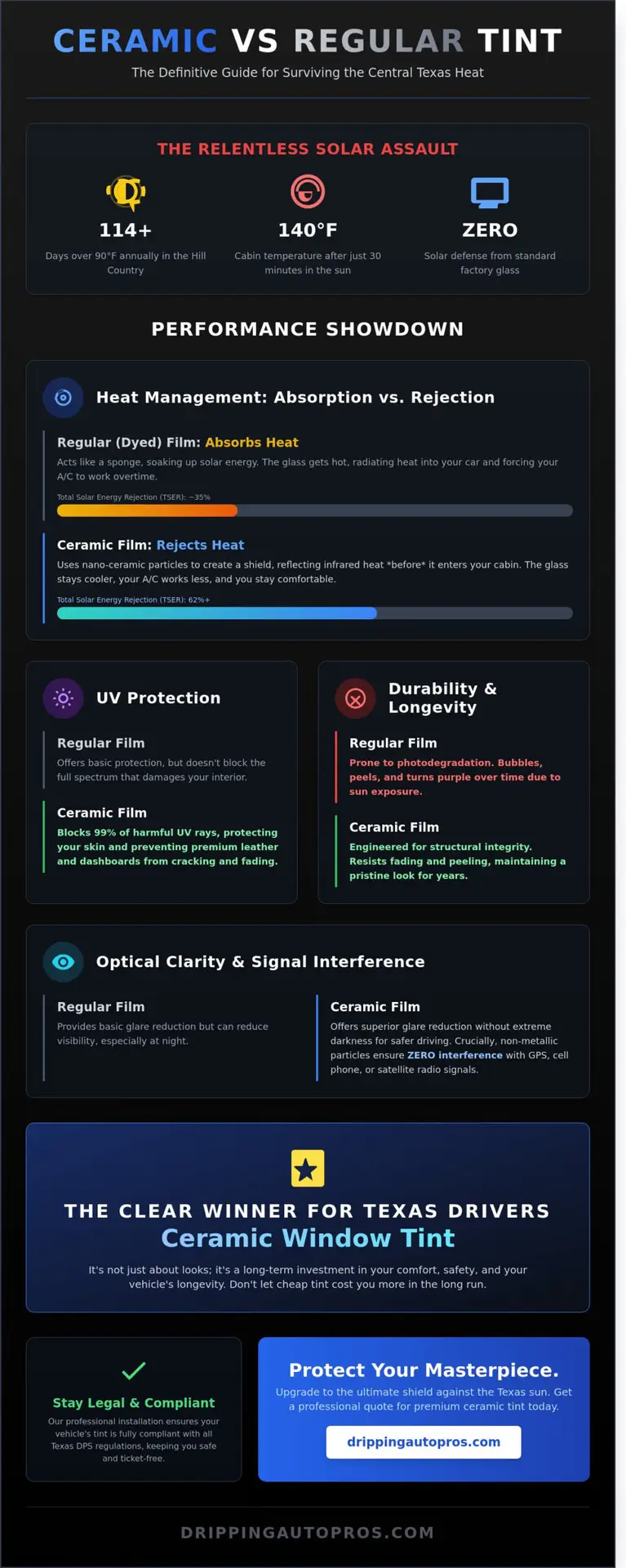
The Central Texas sun presents a relentless challenge for any vehicle owner. When evaluating ceramic tint vs regular dyed films, the distinction lies in how these materials interact with solar energy. Standard dyed films primarily rely on dark pigments to absorb sunlight, but this heat eventually radiates through the glass and into the cabin. In contrast, ceramic films utilize advanced nano-ceramic particles that are non-conductive and non-metallic. This technology allows for a much higher Total Solar Energy Rejection (TSER) rating. While a typical dyed film might offer a TSER of 35 percent, professional-grade ceramic films frequently reach ratings of 62 percent or higher, creating a tangible difference in cabin comfort.
Driver safety also improves with the superior clarity of ceramic technology. Navigating Highway 290 during the intense glare of a late afternoon sunset requires maximum visibility. Ceramic films provide exceptional glare reduction without the need for extreme darkness. This results in better visual clarity and “night vision” compared to traditional films of the same shade. You get the privacy you desire without sacrificing the ability to see clearly during evening drives through the Hill Country.
Infrared Rejection: The Ceramic Secret Weapon
Heat is carried by more than just the light you can see. Infrared radiation is the primary culprit behind that stinging sensation on your skin while driving. Regular tint blocks light while ceramic blocks the energy within the light. By filtering out up to 95 percent of infrared rays, ceramic film significantly reduces the thermal load on your vehicle’s air conditioning system. This efficiency is particularly beneficial for electric vehicles, where reduced AC usage can help preserve battery range during a 105-degree July afternoon.
UV Rays and Interior Preservation
The high UV index in Dripping Springs can degrade a vehicle’s interior in a matter of months. Leather seats crack, dashboards fade, and plastic trim becomes brittle under constant exposure. High-end ceramic films act as an SPF 1000 shield for your car’s cabin, preserving the integrity of every surface. This level of protection is a necessity for high-value investments like Teslas or custom luxury SUVs that feature sensitive interior materials.
When selecting your film, it’s vital to adhere to the Texas Window Tinting Regulations to ensure your vehicle remains compliant with state law. Choosing a premium film is about more than just aesthetics; it’s an essential preservation of your vehicle’s long-term value. The master craftsmen at Dripping Auto Pros can help you select the perfect balance of shade and performance to keep your car in pristine condition.
The Longevity Factor: Why ‘Cheap’ Tint Costs More in Dripping Springs
Investing in your vehicle’s glass isn’t just about the immediate aesthetic; it’s about the lifecycle of the material. In the Central Texas climate, the debate of ceramic tint vs regular often settles itself within the first 24 months of ownership. Regular dyed films rely on organic pigments that succumb to the relentless solar bombardment of our 100-degree summers. While the initial price point of standard film is lower, the recurring costs of failure make it a poor long-term strategy for local drivers.
Common Failures of Regular Tint in Texas
The “purple tint” visible on many older vehicles in Dripping Springs isn’t a style choice. It’s a chemical breakdown known as photodegradation. Standard dyed films use petroleum-based dyes that absorb solar energy rather than reflecting it. This trapped heat causes the dye to oxidize, shifting the color from a crisp charcoal to a translucent violet. Simultaneously, the extreme temperature swings in the Hill Country cause the glass to expand and contract. This mechanical stress, combined with the breakdown of low-grade adhesives, leads to the unsightly bubbling that obscures your vision and ruins your car’s profile. If your current film has reached this stage, you can explore our professional window tint removal guide to see how we restore glass clarity before a premium application.
The Durability of Ceramic Nanotechnology
Ceramic film utilizes non-conductive, inorganic particles that are too small to be seen by the naked eye but large enough to provide a formidable shield. Because these particles aren’t carbon or dye-based, they’re impervious to sun-bleaching. A premium ceramic install maintains its deep, “True Black” hue for the life of the vehicle. This stability is backed by scientific principles regarding the Energy Efficiency of Window Films, which highlights how high-performance attachments manage solar heat gain without degrading over time. These films are engineered to reject up to 99% of UV rays, ensuring the interior remains protected for years.
Beyond color stability, professional-grade ceramic tint vs regular options offer superior physical protection. High-end ceramic films feature multi-layered scratch-resistant coatings that withstand the micro-abrasions caused by daily window operation. While a regular film might show vertical streaks and wear within 3 years, a ceramic application acts as a permanent investment. The bond remains flawless even when facing the 105-degree peaks of a Texas July. When selecting a pro installer, always look for a lifetime transferrable warranty. This guarantee reflects the confidence that the film won’t peel, crack, or bubble, regardless of how many seasons it spends parked under the Texas sun.
- Ceramic: Inorganic particles that never lose their pigment.
- Regular: Organic dyes that oxidize and turn purple within 2 to 4 years.
- Ceramic: High-bond adhesives designed for 100-degree heat cycles.
- Regular: Standard adhesives that off-gas and bubble under extreme thermal stress.
Choosing the right film is about more than just shade. It’s about ensuring your vehicle remains a masterpiece of both form and function for as long as you own it.
Choosing Your Shield: Legal Limits and Performance Standards in Texas
Investing in your vehicle’s comfort requires a balance between maximum heat rejection and strict adherence to Texas Department of Public Safety (DPS) regulations. In Dripping Springs, the law mandates a Visible Light Transmission (VLT) of at least 25% for front side windows. This measurement accounts for both the factory glass and the applied film. When evaluating ceramic tint vs regular, the choice becomes clear for the discerning driver. Regular dyed films often require a darker shade to provide even a fraction of the heat protection that a high-performance ceramic film achieves at a legal 25% limit.
Our specialists utilize precision tint meters to verify every installation. This ensures your vehicle remains a legal sanctuary. These meters measure the exact percentage of light passing through the glass, leaving no room for guesswork during a roadside inspection. If you require a darker film for health reasons, the Texas DPS allows for a medical exemption. This requires a signed statement from a licensed physician or optometrist, which allows you to bypass standard VLT limits to protect your skin or eyes from intense solar radiation. For a complete breakdown of how to stay street-legal while maximizing heat protection, our guide to legal tint in Texas for Dripping Springs drivers covers every 2026 regulation in detail.
Navigating Texas Tint Laws
Texas law applies differently depending on your vehicle’s classification. For sedans, the 25% VLT rule often applies to the rear side windows as well. However, SUVs and trucks enjoy more leeway, allowing for much darker “limo tint” on the back glass to protect passengers and cargo. You can find every detail for your specific vehicle in our comprehensive guide to Texas tint laws. For those who prefer a factory look, clear ceramic options offer a sophisticated alternative. These films provide the unrivaled infrared rejection found in the ceramic tint vs regular comparison without significantly altering the aesthetic of your glass.
Windshield Protection: The Frontal Heat Entry Point
The windshield is the primary gateway for solar energy, responsible for roughly 40% of total cabin heat gain. While many residents opt for the traditional “eyebrow” strip above the AS-1 line, the modern standard for heat control is a full-surface clear ceramic application. This advanced film acts as a transparent armor, blocking heat before it penetrates the dashboard. It’s a critical investment for interior longevity, preventing the cracking and fading common in Central Texas. Always ensure your installer understands the latest front windshield tint laws and protection standards to keep your car both cool and compliant.
Ready to upgrade your vehicle with a legal, high-performance heat shield? Contact the specialists at Dripping Auto Pros today for a professional consultation.
Beyond the Glass: Total Vehicle Armor for the Hill Country
Choosing between ceramic tint vs regular film is a vital decision for your daily comfort, but it’s only one piece of the preservation puzzle. In the Texas Hill Country, the environment attacks your vehicle from every angle. While high-end window film manages the heat entering your cabin, the rest of your investment remains vulnerable to UV oxidation, acidic bird droppings, and physical road debris. We don’t just tint windows; we engineer a comprehensive shield designed to withstand the specific rigors of Central Texas driving.
True vehicle protection requires a layered approach. Your windows, paint, and trim all face different threats, so they require specialized solutions. By combining advanced window films with exterior armor, you create a vehicle that maintains its showroom floor value for years. This holistic strategy is what separates a standard detail from the elite craftsmanship provided by the specialists at Dripping Auto Pros.
PPF: The Physical Armor Your Tint Can’t Provide
Window film is designed to filter light and heat, but it cannot stop a piece of limestone flying off a ranch road at 60 miles per hour. Paint Protection Film (PPF) is the heavy-duty solution for physical impacts. This transparent, urethane barrier is applied to the high-impact areas of your vehicle, such as the hood, bumper, and mirrors. It acts as a sacrificial layer that absorbs the energy of rock chips and prevents insects from etching into your clear coat. If you want to understand how this technology defends your car, read The Ultimate Guide to PPF in Dripping Springs. PPF is the essential companion to ceramic window film, providing the impact resistance that glass coatings simply cannot offer.
Revivify and Feynlab: Surface Protection for the Texas Sun
The same UV rays that fade your upholstery also wreak havoc on your paint. Without a dedicated barrier, your clear coat will eventually become brittle and lose its depth. Applying a Revivify Self-Healing Coating provides a revolutionary defense that actually heals itself when exposed to heat. This means those annoying fine swirls from washing can disappear under the afternoon sun.
Beyond self-healing properties, the hydrophobic nature of a professional ceramic coating for cars ensures that water and contaminants slide off the surface. This makes maintenance significantly easier and keeps your car looking pristine between professional details. When you weigh the benefits of ceramic tint vs regular options, remember that your paint deserves that same level of elite, long-term commitment. Crafting a comprehensive protection plan ensures your vehicle remains a masterpiece, regardless of the heat or the road conditions ahead.
Secure Your Investment Against the Hill Country Sun
Navigating the relentless Texas sun requires more than just a dark window; it demands a tactical shield for your vehicle. The data is clear. Ceramic film rejects up to 99% of harmful ultraviolet rays and can block up to 80% of infrared heat, while standard dyed films often begin to bubble or peel within 24 to 36 months of intense exposure. When you weigh the benefits of ceramic tint vs regular options, you’re choosing between a temporary fix and a permanent layer of automotive armor.
As a veteran-owned and operated team, we understand that true protection involves every detail, from precision paint correction to the application of Revivify self-healing coatings. We treat your car as a masterpiece, ensuring your cabin stays significantly cooler during those 100 degree Dripping Springs afternoons. You don’t have to settle for compromised visibility or deteriorating materials. Our specialists are ready to help you define the ultimate standard for your vehicle’s longevity and comfort. Request a Consultation for Total Vehicle Protection at Dripping Auto Pros. Your journey toward a pristine, protected vehicle starts with a single expert decision today.
Frequently Asked Questions
Is ceramic tint really worth the extra money in Texas?
Yes, ceramic tint is a vital investment for any vehicle in Dripping Springs because it rejects up to 99% of UV rays and over 95% of infrared heat. In Central Texas, where we experience more than 40 days of triple-digit temperatures annually, the ceramic tint vs regular film comparison shows that ceramic prevents interior leather from cracking and significantly reduces dashboard warping. It’s a long-term shield that preserves your vehicle’s resale value.
Can you see out of ceramic tint at night as well as regular tint?
You’ll experience superior night visibility with ceramic film because it offers higher optical clarity than traditional dyed alternatives. Traditional films rely on heavy pigments that can cloud your vision in low-light settings. Ceramic technology uses nano-sized particles that maintain a crisp, high-definition view of the road. This allows you to navigate dark Hill Country backroads safely while still enjoying maximum privacy and heat rejection during the day.
Does ceramic tint block cell phone and GPS signals?
Ceramic window tint doesn’t interfere with electronic signals because it contains zero metallic layers. Older metallic films often caused a 30% drop in signal strength for GPS and mobile devices, leading to dropped calls and navigation errors. Our advanced ceramic films are 100% non-conductive. Your 5G connection and satellite radio remain fully functional, ensuring your cabin stays connected without the interference issues found in lower-grade metallic products.
How much cooler will my car be with ceramic tint?
Ceramic tint can reduce your vehicle’s interior surface temperature by as much as 25 degrees Fahrenheit during peak afternoon sun. While standard dyed films only block roughly 15% of infrared heat, premium ceramic options reject nearly 95% of those burning rays. This means your air conditioning system reaches a comfortable temperature much faster. It reduces the mechanical strain on your compressor during our relentless July and August heatwaves.
What is the legal tint limit for front windows in Texas?
The Texas Department of Public Safety requires that front side windows allow at least 25% of light transmission. This regulation, established to ensure officer safety, is something we follow with meticulous precision. We use professional light meters to guarantee your film meets the 25% VLT requirement exactly. This ensures your vehicle remains street legal while providing the ultimate armor against the sun without risking a failed state inspection. You can review the full 2026 compliance standards in our detailed overview of legal tint in Texas and what Dripping Springs drivers need to know.
How long does ceramic window tint last compared to dyed film?
Ceramic tint typically lasts the entire lifespan of your vehicle, whereas standard dyed films often begin to bubble or turn purple within 3 to 5 years. The inorganic ceramic particles don’t break down or fade when exposed to intense UV radiation. When analyzing ceramic tint vs regular dyed options, the ceramic choice is a permanent solution. It carries a lifetime warranty against peeling, ensuring your glass remains pristine for a decade or more.
Can I put ceramic tint over my factory-tinted glass?
You can absolutely apply ceramic tint over factory-tinted glass to add the heat rejection that original glass lacks. Most factory “tint” is simply dark pigment infused into the glass that offers nearly zero protection against infrared heat. Adding a layer of high-performance ceramic film creates a dual-layer defense system. It transforms your SUV or truck into a cool sanctuary while maintaining the sophisticated, dark aesthetic you desire for your vehicle.